Tuesday, November 19, 2013

JUDITH FARR

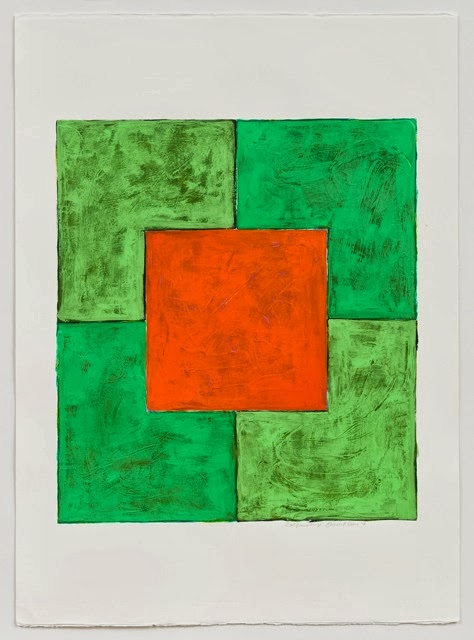
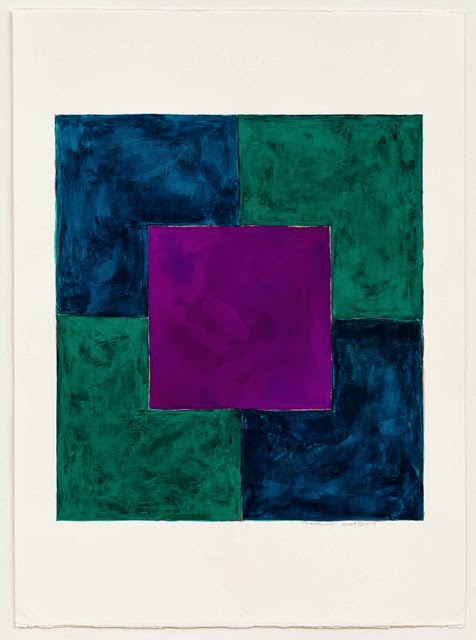
Exit, gouache on A3 paper, 2013


What are you working on in your studio right now?

 
I’m working on projects for my MFA, which I’m doing with the Open College for the Arts located in the UK. I just started the course a few months ago, but so far it’s really challenging, which is just what I’m doing it for, so I’m very pleased. The current task is called ‘Form, frame, and fracture’, we have a 12 hour time limit and so far I’ve done two and a half hours of it. I started very quickly, and I just started painting almost immediately. I don’t like to over think things, something I used to do, so I just went with my first response to the project title. I remembered this collage by Ellsworth Kelly where he had cut up a painting of some brushstrokes into 49 squares and arranged them at random to create a new fractured composition. I really enjoyed the simplicity of this approach and the rhythm it created.


Can you describe your working routine?

 
It normally takes me a while to get started, but when I do get going I work very quickly. I’ve found that I work best in short bursts because I get tired easily and when I’m tired I overwork things. I like to work quickly and then come back after a break with new energy. I don’t have a particular time of day for working, I just do what I can in the time I have, while my daughter is at school if I don’t have any work on (I’m an English tutor).


Task 2 project 1, 
inspired by Ellsworth Kelly acrylic on paper


Can you describe your studio space and how, if at all, that affects your work?
 
 
My studio has just been refurbished after the successful completion of a crowd funding project that I did during the summer. It’s about 25m2 and so far it’s not too cluttered, so it’s very light and airy. I have two south-east facing windows and one south facing one, so I have good light in the morning. The studio is just outside the town where I live in Spain. It’s quite rural and the studio looks out over fruit trees and farm buildings. Being able to see trees out the window makes me feel very happy and lucky, so I think it definitely has a positive impact on my work. I’ve never had such a beautiful space to work in before and I treasure it and any time I have to come here. Cycling down here I feel like a very privileged person. The studio is above the offices of a company that rents out gardening allotments, they also do a lot of courses and activities related to this and everything to do with living an ecologically friendly lifestyle. So there are always people around to talk to, there are also chickens, who I sometimes chat to. It’s just a great place to come. I do little illustration and design jobs for them in return for using this studio space, and they’ve allowed me to do it up how I wanted.


Tell me about your process, where things begin, how they evolve etc.
 
 
I tend to start off with a colour, an automatic drawing based on something I’ve seen or something I going through that I need to work out. I may be thinking about something I’ve seen in nature or some colour combination that I found interesting or many times the work of an artist I’ve seen and felt inspired by. I try to allow things to happen and not worry too much about making something good. I’ve been fighting against a need to control everything in my work and in life, so I try to do the opposite while working. I have to keep a sharp eye on myself so that I don’t get too worried about the work. In this way I make some initial drawings or marks on the surface (currently mostly paper) and go from there. Sometimes I’ll stop fairly early and feel satisfied that the work is done, whether good or bad it is done. Other times I’ll spend more time working into the work until I feel frustrated and can’t see a way to save it. I love this part because this struggle can lead to some very interesting things. Usually when I get to a certain point of being frustrated with a piece I’ll leave it for another day, and when I come back to the work after having had a rest I can usually find a way to save it, in this way I’ve made some of my favourite pieces of work.


work in progress, gouache and acrylic on A2 paper


What are you having the most trouble resolving?


I have on going doubts about making pictures that are two chaotic and fussy, I also worry that I’m more visceral than intellectual about my work. I’d also like to use a wider range of materials. I’m currently stuck on a piece that I spent a lot negative energy on, I was having a bad day and every decision I made about the piece just made things worse. This is potentially a good thing because I can do whatever I want to it now and not care too much about messing it up. I have been tentatively combining the use of gouache and acrylic paint on my pictures these days wondering what would happen and it’s been quite interesting. I’ve started reading this book by James Elkins called ‘What painting is’, so far it compares the artist’s intuitive use of materials to alchemy, so now when I’m painting I feel a bit magical, I just love that idea that you have to feel your way through a process where there are no set outcomes.


Do you experiment with different materials a lot or do you prefer to work within certain parameters?


I would love to be more experimental with materials, it’s definitely a long term goal, but it takes me a while to find the courage to do this. This year I’ve been working with acrylic, oil and gouache and I really enjoyed seeing how the materials have influenced the work. I would like to spend more time using oil, but it’s daunting for me because it’s quite slow and messy and doesn’t allow me to work at the speed I enjoy with gouache and acrylic. I also enjoy collage and I’ve done a bit of work with plasticine. I’d really like to try spray paints at some point.


Wave, gouache on A3 paper


What does the future hold for this work?


I really don’t know where my work is going, I’m just really enjoying the time I have to paint. I’m sure the MFA will have a huge effect on what I make, as well as working in my new studio space. I’m noticing a need to make larger work and I feel quite board of working on rectangles I’m not sure how feelings are going to be resolved yet.


Is there anything else you would like to add?


I’d like to thank you Valerie for the opportunity to participate in this wonderful blog, which I’ve been a follower of for a while now. And thanks also to my artist friends on Face Book who have been so supportive of my work; this has made a huge difference to my confidence in myself as an artist.  


Was I thinking about cake, gouache on A3 paper, 2013


Monday, November 4, 2013

MATTHEW WONG

Untitled, oil on canvas, 100 X 80 cm


What are you working on in your studio right now?
 
 
My main studio for oil painting is in Zhongshan, China, and at the moment I am working on a large batch of canvasses in preparation for my first solo exhibition, which will be held at the artist village compound where my studio is located. The show is currently planned for Easter 2014. I spend half my time there, the other half in Hong Kong, where I have works on paper and an assortment of smaller paintings on board and smaller canvasses being worked on on a daily basis.


Can you describe your working routine?
 
 
My working routine is not really fixed according to any schedule, but when I am in Hong Kong, work begins from the moment I wake up in the morning and usually carries on, on and off, until I retire very late at night. The only thing that takes place at the same time every day is when I get out of bed, I have to do an ink drawing before doing anything else, such as brushing my teeth or eating. I spend a good part of the daytime at the library writing poetry and poring over art books, as well as photographing around town but with no fixed project or goal in mind. In the evenings after dinner I'm usually listening to music, looking at art online, and then drawing/painting until around 2 or 3 A.M. In Zhongshan the schedule is a bit more disciplined, as I don't do as much poetry or photography up there. I basically go into the studio in the mornings and paint until the early evening, pretty much every day of the week.


Can you describe your studio space and how, if at all, that affects your work?

 
My studio space in Zhongshan is a larger, proper studio set up so I have more freedom of movement when working there, can work on bigger pieces, and also since it is purely a work space where I do not live, it gets pretty messy as my painting process is quite physical. In Hong Kong I just work in my apartment's living room, where I still make a mess that I have to clean up, but due to the significantly smaller space I generally don't work on anything bigger than 30 X 22 inches (76 X 56 cm) there.


Untitled, acrylic on paper, 76 X 56 cm


Tell me about your process, where things begin, how they evolve etc.

 
My process is fairly intuitive without much attention paid to a larger conceptual framework or serial working manner at the moment. I began teaching myself to draw and paint from scratch since 2012, so it is still very early for me and I am just trying to see 'what the paint does,' as I believe Robert Ryman once said of his own beginnings as a painter. At the center of my practice is exploring the materiality of paint and struggling to yield a surface that gives a sense of space and structure, however contradictory, that reaches a state of form I can live with. As it is, I have gotten to a stage in the past few months where there is starting to be some consistency and integration from work to work, often with a landscape-like space or an archetypal suggestion of figures/figuration somewhere in the picture plane. I figure these basic painterly tropes are a good starting point for me to establish my visual vocabulary and also have a dialogue with the paintings of the past and present that I admire and learn from looking at.
 
When I actually get to paint, there really isn't any methodical approach or system to what I do. A color may just come to mind at random, and I will begin putting that onto the surface, making gestures without any plan or expectation of what I am going to get out of it, but one mark responds to another, colors start piling up, getting scraped away, and built up again, and so on and so forth, and somewhere along the line I always reach a certain point where I can intuitively sense the general shape and structure of the image I need to work towards. Once I get to that point, it is just a matter of continuing to work the painting in that direction, and to clarify that very vague and fleeting but definitely there inkling of what the image would be. Sometimes I could just be making marks almost haphazardly and at a certain point I step back and realize I have a finished, satisfactory image that I have no idea how I managed to pull that one off. I'm just going with my gut at the moment. But often times, my gut also cancels itself out and I keep painting over an image with a totally different image, and work like this can go on for months before a single surface is resolved. But of course, it may not be resolved anymore a bit further down the road, so we will see! The key for me is to remain open and receptive to my creative instinct, but also to be able to let go at times and accept.


Top: Harbinger, ink on paper
Middle: Untitled, ink on paper
Below: Sparrow's Flight, ink and acrylic on paper
all 76 X 56 cm


What are you having the most trouble resolving?


I guess the thing I am having the biggest difficulty resolving right now is whether to work in a manner where I strive to make pleasing, beautiful images that other people can like and accept easily, therefore giving the impression that I am a "good" painter, whatever that means, and making that an end in itself, or to also be able to accept the parts of my creativity that occasionally yield up ugly, difficult pictures and seeing where those take me. I am still young and it is natural I suppose for someone at my age to want to be heard and understood in the world, to be liked and respected. But many of the painters I admire seem to have moved beyond this, and are able to really paint out of themselves without the need to impress in particular. I hope I can develop the courage to get to that stage someday, as I realize the habit of simply making well qualified, impressive work that does not really challenge some existing standards of form and aesthetics is also a symptom of much art out there that heavily caters to the marketplace. I must always keep in mind to prioritize constant movement and experimentation over the acquisition of virtuosity.


Untitled, oil on canvas, 100 X 80 cm


Do you experiment with different materials a lot or do you prefer to work within certain parameters?
 

I like to work in different mediums: oils, acrylics, ink, watercolor and gouache, and I don't really place any of them in higher importance than the rest, even though I sometimes receive feedback such as "your ink works are more consistent than your oils" or something like that.. All still fairly traditional materials, but I like to experiment with each of them and figure out what properties and resistances they yield, and sometimes in combination with each other. This is a good way for me to learn about paint itself and how it engages with different surfaces, such as paper, canvas, wood, etc.


What does the future hold for this work?


I really do not know what the future holds for my work, except that I'd like to keep making it and hope that more people will be able to see it, especially in the flesh. Facebook has been great as it has brought me out of isolation and put my images on public circulation for anyone to access and have a dialogue with, but the tactile nature of my work also requires a personal, physical presence to be really engaged with.


Is there anything else you would like to add?
 
 
Thank you Valerie for giving me the opportunity for this interview and for the chance that more people can find out about what I do. I'm still learning, so I am grateful to have this platform at this stage for me.


Paradise, oil on canvas, 220 X 170 cm


Sunday, October 6, 2013

PHILLIP J MELLEN

13" x 9", acrylic and house paint on foam, 2013


What are you working on in your studio right now?


I am working on a new series on shaped foam. The goal is to see if I can treat the 'face' of a painting a little more three-dimensionally. On certain pieces, I try to incorporate the sides more, along with the different picture planes I create by shaping the foam. Sometimes I get lost in the painting process and this doesn't always happen. The paintings often stay in the realm of a 'traditional' front, sides etc. I am trying to eliminate that fact, as I said, by shaping the supports a little more. I am determined to see where this approach will take me.


Can you describe your working routine?


Mornings are tough. I am often taken over by distractions. As the day moves to afternoon is when I get started on painting for the day. I like to have a large block of time while working. I hope to have at least 3 days straight in which to work. I try and shut out the world and work.


Can you describe your studio space and how, if at all, that affects your work?
 
 
My studio is a total mess. I do manage to keep a smaller organized area where I paint, so I guess it has a balance. I have been painting on a table more recently, especially on the new smaller works. Some of my older works are off in the corner, I sometimes think about getting a dumpster to clean out the old work. I feel as if I am no longer ‘there’, like I’m done with those works. Hopefully that is a sign of growth as an artist.


18" x 11", acrylic and house paint on foam, 2013


Tell me about your process, where things begin, how they evolve etc.


My process sometimes begins with a small sketch of a shaped support I would like to work on. Other times it starts when I decide to pick up the hand saw and sculpt a shape out of the foam with no preconceived idea about an outcome.
In the process, I will occasionally take short breaks and that can really help things along. I will step away from the work and not look at it. I am not always sure of every ‘painting move’ to make next. These little breaks can bring new clarity on how to take the next step.


What are you having the most trouble resolving?


My issue with not cleaning my brushes.


Do you experiment with different materials a lot or do you prefer to work within certain parameters?


I am sort of sticking to the foam and acrylic and house paint at the moment. I am really impatient and can’t stand waiting for paint to dry. Though the pause of paint drying often helps with generating ideas and titles for paintings. I have worked with wood, paint and foam together in the past. Although, the two “works in progress” paintings I included, incorporate fabric, acrylic and house paint and foam.


in progress


What does the future hold for this work?


Hopefully more and more of it. I am searching, in hopes of unlocking possibilities with these materials. I am a wanna-be builder of sorts and I plan on pushing the three-dimensional quality as the series progresses. We shall see.


Is there anything else you would like to add?


Thank you for the opportunity to share with you and your readers. I have to say that this was inspiring, thanks again!


13" x 12", acrylic and house paint on foam, 2013


Tuesday, October 1, 2013

LOUISE P SLOANE

VioletsRed, 2013
Acrylic Paint on Bent Aluminum Panel
56 x 48 x 3/8 inches


What are you working on in your studio right now?


I am constantly engaged in the creation and production of new paintings.  As each work signals the path to the next, my inspiration and energy never wanes.  Color combinations most often appear in dreams, and I keep a pad and pencil by the bed.  The colors generally present themselves in my mind’s eye with tremendous clarity and force – waking me from sleep. 


Can you describe your working routine?


I’m very fortunate to have my studio space at home.  My regular routine is to awaken, make a cup of coffee and go directly into the studio.  Not having to travel makes this transition extremely easy.  I like to take care of email and correspondence in the morning.  By late morning, I’m in my coveralls and am painting.   I generally don’t break until late afternoon.   I’m back in the studio painting before 6PM.  I can usually get in a couple of hours before stopping to prepare and eat dinner.  Many nights I go back to work and will paint straight thru until the morning.  I do not find that I am happy away from my work and do not often go far from my studio.  I do try to make time to attend exhibitions and openings that have significance to me, but once I am immersed in a piece, everything else falls by the wayside.


Can you describe your studio space and how, if at all, that affects your work?
 
 
My studio space is a 500 square foot room with northern skylights and soaring ceilings – 16’ high.  It’s a beautiful and well lighted space and I’ve been very happy painting here for the last 20 years.   Having a comfortable accessible studio space makes my work process very easy.  All I have to do is walk through an interior door from my home and I am at work.  For me this has been a vital part of my professional development.  I’ve had a large studio attached to my residence since 1974.  I know that many artists prefer to have their workspace in another location.  For me having 24/7 access without travel significantly impacts my productivity and capability to explore any and all ideas: sheer bliss.


Tell me about your process, where things begin, how they evolve etc.
 
 
I approach each painting as though I have never painted this image before, allowing the works to evolve organically.  The only set parameters are those surrounding preparation.  Each panel must be degreased, sanded rough, cleaned and have a bonder applied so that my acrylic paints will adhere to the surface.  Then I apply a layer of white acrylic gesso.  Every work has a grid drawn onto the surface.   Laying in the texture is physically challenging.  I like to put down each quadrant during one session – this gives the overall texture of that portion a cohesive conforming surface. Each time I leave the studio and return, there is a slight difference, as my hand adjusts to the pressure of the process.  This thick surface needs to dry hard before I can begin the next portion of the painting, which is where my heart and soul really take over and I feel like I am painting.  Often during this drying time, I will create color studies on paper, tyvec or any other flat surface I have at hand.  I find that this keeps my senses heightened to various color relationships and textures.   There is an ebb and flow that each painting generates, and I follow its lead.  The works all address my interests in language, texture, color and geometry.   The juxtaposition between thin and thick, for whatever reason, is particularly attractive to me. My most recent works are densely textured while maintaining a thin profile – usually 1/8” thick. I also have been trying to maintain sizes of works using a 10:9 ratio as my gauge.  I enjoy the play of the painting when it is slightly off square, with square either at dead center or slightly off, anchoring the entire
image.


From top: YellowsLightBUSquare, GreensOrange, DeepGreensViolet
All are acrylic paints and pastes on 300# Cold Press Fabriano Paper 30 x 22 inches. 
All photos of works on paper are Photo Credit:  D.James Dee


What are you having the most trouble resolving?
 
 
A quest for resilient responsive brushes that don’t wear out from the application of paint onto the hard and unforgiving surfaces is ongoing.    While painting the negative spaces, I use very small brushes (0,1,2).  I buy them by the dozens, and never seem to have enough on hand.  Additionally I am working with a designer to create strainers that can maintain an ultra thin profile and be lightweight.  I enjoy experimenting with various paints and materials, always looking for new ways to express light and texture.  As the evolution of my work dictates improvisation, there are often “mistakes”. These mistakes generally lead to new and exciting changes in the work.   Golden has a terrific tech department and I am constantly receiving new materials to explore.  I think that it is very important for artists to find ways in which to move out of their own comfort zones to keep their work fluidly moving forward. The consistent daily time in the studio feeds this type of creative process.  Although I am indeed the painter, the works have a life of their own – I’m just following their cues.    I anticipate that the work will continue to inspire and surprise me while maintaining its integral tie to past abstraction and adding to the current dialog. 


YYLB  2013  52 x 46 x  1/8 inches acrylic paints and pastes on bent aluminum panel.
Below: YYLB-section detail 

Photo Credit:  Etienne Frossard


Monday, September 16, 2013

NICK CARRICK

Dwelling, oil on linen, 46cm x36cm 


What are you working on in your studio right now?
 
 
I have just completed a week long artist residency at an artist run gallery in Brighton called The Communi  Ty Arts Centre .I wanted to make work that was between painting, sculpture, collage and assemblage. and also between representation and abstraction  .I found when I cut into the canvas it made an opening .I then attached string and hung the work up in the middle of the room, this made the viewer see through the work and   able to walk around the piece seeing the back of the work as well as the front. This created a sculpture. I also have been making collages and three dimensional objects out of old paintings I have cut up in the past. I made a mountain range from cut up paintings assembled on an old wooden table.


Can you describe your working routine?
 
 
It’s quite sporadic. If I’m not in the studio I am mostly thinking about the next work. I accumulate ideas by sketching, taking photos reading books and articles these things normally create a starting point for me to work from. If I am in the middle of a series of work I have more of a set routine and am in the studio from about 9am till 9pm.I work fast and can paint a painting in one sitting because I want to capture that immediate quality. Sometimes there can be problems and obstacles to a painting or piece of work, so I try and rectify these before leaving the studio. I do not like leaving the studio if there is work I do not like on the walls. I would not be able to relax at night.


Installation view of Communi ty arts centre


Can you describe your studio space and how if at all it affects your work?
 
 
I used to share a studio with someone and although I enjoyed it I felt I was not connecting to the work as well. I now have a cabin of my own at the bottom of  my garden and feel I can be a lot more experimental .Its quite an isolating experience which I think comes across in the work  I am doing now.


Mountain Range, 3D collage


Tell me about your process, where things begin, how they evolve etc?
 
 
I have a vast collection of imagery, ranging from newspaper clippings, old photos , old paintings ,paint splattered cloths and old paper. These act as a spring board into a painting.’ The painting will go through many changes and eventually be completely different to the original photo. I want the work to take on a life of its own freed from its referent. The act of painting becomes as important as the final piece. It’s important to feel lost between the start and the finish of a painting but then arriving at something you are happy with.  The subject of my work is essentially escapism. This can be portrayed by being lost in the making of the work itself or by painting actual everyday life that has elements of escape for example: trains, planes and holidays. I think it is more about escaping the mundane everyday life and connecting with something more spiritual and poetic, or trying to make a connection between everyday life and something more metaphysical.


What are you having the most trouble resolving?
 
 
I suppose its bringing all the elements together to make a coherent body of work as a whole. But then I think that it doesn’t matter that it is disjointed .The steady theme that runs through my work is the notion of escaping ones self. The similarities   how I work are in my own style. Whether the work is abstract, representational, sculpture or in any media is irrelevant. When I am working on a painting the problems I come across are about composition and balance .It sometimes seems like a gamble to paint, it can go both ways, either be awful or amazing .Its that feeling that makes me want to do more. I am currently working on some larger works after a long time working on small paintings. This is proving to be a lot more problematic than I thought. The painting cannot be just a reproduction of the smaller works, there has to be an element of surprise and chance in them.


Found Photograph


Do you experiment with different materials a lot or do you prefer to work within certain parameters?
 
 
I have recently started collaging and assembling recycled cut up paintings this only happens when I have enough detritus to make new work. I have started using found wood, string and masking tape to hold things together. I want the sculptures to look as naïve and crude as I can and not look crafted in any way. I want them to look playful.


What does the future hold for this work?
 
 
The sculpture is in its infancy but I would like to create a series of works with them. I would like to do more residencies where I can make more site specific work and have that sense of creative freedom.


Is there anything else you would like to add?
 
 
I will be showing some paintings at The Sluice Art Fair 2013 in Bermondsey London in October
Thank you for interviewing me